
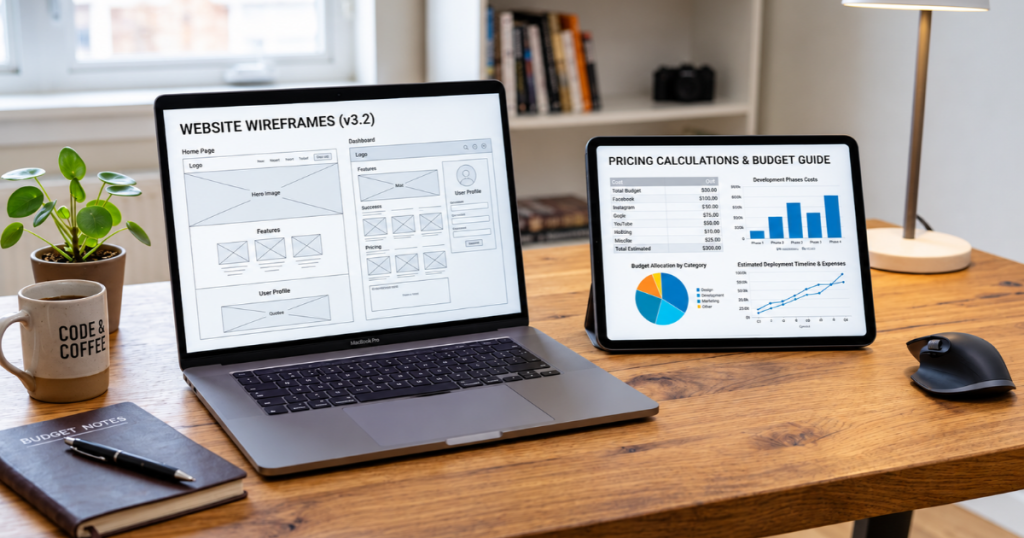
Custom web development costs depend on the type of website you need, its features, design complexity, integrations, and ongoing support requirements. A simple business website generally costs less than a custom web application with user accounts, payment processing, or advanced workflows.
Understanding these expenses helps you set a realistic budget, compare development quotes, and prioritize the features your business needs most.
This guide explains typical project costs, delivery timelines, additional expenses, and practical ways to plan your investment.
Custom Web Development Cost by Project Type
The following figures are indicative budgeting estimates for U.S. and international agency projects, not guaranteed prices or official Amron Software rates.
| Project type | Estimated cost (USD) | Typical timeline |
| Custom business website | 5,000–15,000 | 4–8 weeks |
| Corporate or content-heavy website | 12,000–30,000+ | 6–12 weeks |
| Custom eCommerce website | 8,000–35,000+ | 8–16 weeks |
| Customer portal or membership platform | 25,000–100,000+ | 3–6 months |
| Custom web app or SaaS MVP | 20,000–80,000+ | 3–6 months |
| Complex enterprise platform | 80,000–400,000+ | 6–12+ months |
Actual costs and timelines vary according to functionality, integrations, team structure, content readiness, and approval cycles. Complex requirements can increase both.
Custom web development costs in India
Businesses considering offshore or hybrid delivery may use ₹50,000 to ₹10,00,000+ as a broad preliminary planning range. This is not a verified market average or a direct currency conversion. Advanced applications and enterprise platforms can cost significantly more.
Request a project-specific quote and confirm exactly what it includes before comparing prices.
What Factors Affect Custom Web Development Cost?
1. Features and functionality
The more specialized the functionality, the more development and testing may be required. Standard content pages and contact forms are generally simpler than booking systems, customer dashboards, subscription payments, or role-based access.
Prioritize features that directly support your business goals. You can often launch with essential functionality and add enhancements later.
2. Design and user experience
A website using an established design framework may cost less than one requiring extensive research, custom interfaces, interactive elements, and multiple rounds of revisions.
Responsive layouts, accessible navigation, and clear user journeys are important because visitors need to use the website effectively across devices.
3. Third-party integrations
Integrations connect your website with existing business systems. Common examples include:
- Salesforce and HubSpot: Lead management and customer relationship management.
- Stripe and Razorpay: Online payments and subscription billing.
- SAP: Selected business and operational data.
- REST and GraphQL APIs: Communication between your website and other applications.
Integration costs depend on API complexity, data synchronization, authentication, and error handling. Third-party licensing and usage fees may be charged separately.
4. Content, SEO, and migration
Copywriting, product information, images, multilingual content, and migration from an existing website can add to the project budget.
Technical SEO may also require URL redirects, metadata, structured data, and performance checks, especially when replacing a website that already receives organic traffic.
5. Testing, security, and scalability
Testing helps identify problems before launch. Larger projects may need extensive integration testing, permission checks, performance testing, and security reviews.
The chosen technology should also support your expected growth without introducing unnecessary complexity or maintenance costs.
Custom Development vs. Ready-Made Platforms
Custom development is not always the most economical option. Ready-made platforms can work well for businesses with standard website requirements.
| Factor | Custom development | Ready-made platform |
| Initial cost | Generally higher | Generally lower |
| Specialized features | Tailored to requirements | Depends on available features |
| Launch time | Often longer | Often faster |
| Integrations | Can support custom workflows | Depends on platform and APIs |
| Flexibility | Depends on implementation | May have platform limitations |
| Maintenance | Custom code and integrations require support | Platform, theme, and plugin updates required |
For example, a small service business may need only a website with service pages and enquiry forms. A business requiring a custom customer portal, complex permissions, and internal system integration may benefit from tailored development.
Explore Custom Web Development: Benefits and Business Use Cases to understand when a custom solution may be appropriate.
Hidden Costs to Include in Your Budget
The initial development quote does not always cover every expense after launch. Ask your provider about:
- Domain registration and hosting
- Software licences and API usage fees
- Payment processing charges
- Security monitoring and backups
- Bug fixes and software updates
- Content changes and new features
- Technical support and staff training
Budget tip: As a preliminary guideline, some businesses allocate around 15–20% of the initial development cost annually for maintenance and updates. Actual costs vary by project and support requirements.
For example, a ₹5,00,000 website would have an illustrative annual allowance of ₹75,000–₹1,00,000 at that rate. This is a planning example, not a guaranteed maintenance quote.
Ask for a clear breakdown of included support, response times, exclusions, and charges for future development.
How to Compare Development Quotes
Do not select a provider based on price alone. Compare proposals using the same requirements and check what each quote includes.
| Evaluation area | What to confirm |
| Scope | Required pages and features |
| Design | Responsive layouts and revision limits |
| Integrations | Systems included and excluded |
| Testing | Functional, browser, and performance checks |
| Timeline | Milestones and approval requirements |
| Ownership | Code, accounts, and documentation access |
| Support | Maintenance and post-launch services |
| Payment | Milestone-based terms and additional charges |
Ask providers to explain their pricing assumptions and how scope changes affect the total cost. A detailed proposal helps prevent misunderstandings later.
Website Budget Planner: Prepare Before Requesting a Quote
A clear project brief makes it easier for a development team to estimate cost and recommend suitable technology.
Website Budget Planner checklist
- Define your website’s primary business goal.
- List essential launch features.
- Separate must-have features from future improvements.
- Identify payment gateways, APIs, and other integrations.
- Confirm who will prepare content and images.
- Set a preliminary budget and launch window.
- Include hosting, licences, and maintenance.
- Define how you will measure success.
Need help estimating your project?
If you are unsure which features to prioritize, discuss your business goals and technical requirements with a development team. Amron Software’s custom web development services can help you explore a suitable approach.
Get a Cost Estimate to discuss your project requirements.
Frequently Asked Questions
How much does a custom website cost for a small business?
A custom business website may cost 5,000–15,000 under the indicative U.S. and international agency ranges in this guide. Pricing in India and other delivery markets can differ based on scope, functionality, and team structure.
How long does custom web development take?
A business website may take around 4–8 weeks, while a complex web application may take several months or longer. These are estimates, not guaranteed delivery dates.
Why is custom development more expensive than a template?
Custom projects may require tailored design, specialized functionality, integrations, and additional testing. Templates can be more economical when they already meet your needs.
Is custom web development worth the investment?
It may be worthwhile when your business needs unique workflows, specialized integrations, or features that existing platforms cannot support efficiently. For standard requirements, a ready-made platform may be more cost-effective.
How can I reduce development costs?
Define requirements clearly, prioritize essential features, prepare content early, compare itemized quotes, and limit unnecessary scope changes. A phased launch can also spread investment over time.
Get a Custom Web Development Cost Estimate
Custom web development costs depend on the features you need, the complexity of your project, and the support required after launch. A clear, brief and transparent quote helps you understand the total investment before committing.
Plan your requirements, compare proposals carefully, and choose a solution that fits your current needs and future goals.
Ready to discuss your project? Contact Amron Software to request a project-specific cost estimate.