
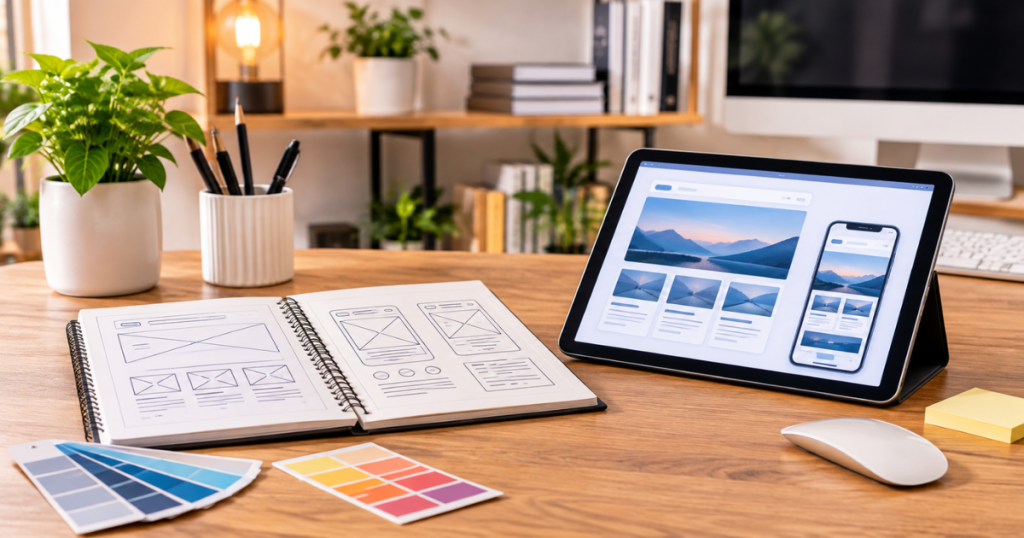
A business website is often the first interaction potential customers have with a brand. Poor navigation, confusing layouts, and outdated visuals can create a negative impression and discourage visitors from exploring further.
Effective web design combines appearance, usability, accessibility, and functionality to create a website that communicates your brand and supports business goals.
Understanding its principles, types, and best practices can help businesses build more effective online experiences.
What Is Web Design?
Web design is the process of planning and creating a website’s visual appearance, layout, structure, and user experience.
Its main elements include:
- Layout: Organising website content and images.
- Typography: Choosing readable fonts and text styles.
- Colour scheme: Maintaining consistent brand colours.
- Navigation: Helping visitors find information.
- User experience (UX): Making the website easy to use.
- Responsive design: Adapting layouts to different devices.
Web design focuses on appearance and user interaction, while web development handles the technical implementation and functionality.
Why Is Good Web Design Important?
Good web design helps businesses create a positive online experience.
- Builds credibility: A professional appearance encourages trust.
- Improves usability: Clear navigation makes information easier to find.
- Supports conversions: Effective CTAs encourage inquiries and purchases.
- Strengthens branding: Consistent visuals improve brand recognition.
- Supports SEO: Good structure and mobile usability contribute to a stronger website foundation.
7 Essential Web Design Principles
1. Visual Hierarchy
Use headings, font sizes, spacing, and contrast to highlight important information.
2. Consistency
Maintain consistent colours, typography, buttons, and layouts across website pages.
3. Simple Navigation
Use clear menu labels and logical page structures so visitors can find information quickly.
4. Readability
Choose legible fonts, short paragraphs, descriptive headings, and sufficient colour contrast.
5. Responsive Design
Ensure your website works properly on smartphones, tablets, and desktop screens.
6. Accessibility
Include meaningful image alt text, keyboard-friendly navigation, and descriptive form labels. Follow W3C WCAG 2.2 guidelines.
7. Clear Calls to Action
Use visible, specific buttons such as “Request a Quote” or “Contact Us” to guide visitors.
What Are the Different Types of Web Design?
Different businesses require different website approaches.
| Type | Description | Suitable For |
| Responsive | Adapts layouts to screen sizes. | Business websites and online stores. |
| Adaptive | Uses predefined layouts for selected devices. | Device-specific experiences. |
| Static | Displays fixed content. | Portfolios and simple websites. |
| Dynamic | Displays changing content based on data or user actions. | Portals and content-rich websites. |
| E-commerce | Supports product browsing and online purchases. | Online retailers. |
| User-Centred | Focuses on user needs and behaviour. | Interactive websites. |
Which should you choose? Small businesses often need responsive informational websites, while online retailers require e-commerce functionality. Content-heavy platforms may benefit from dynamic design.
8 Web Design Best Practices for Businesses
- Define website goals: Identify whether your website should generate leads, sell products, or provide information.
- Create a clear homepage: Explain what your business offers and whom it serves.
- Organise service pages: Highlight services, benefits, and relevant examples.
- Improve website speed: Compress images and remove unnecessary scripts.
- Prioritise mobile usability: Make menus, buttons, and forms easy to use.
- Use relevant visuals: Choose images that support your brand and content.
- Follow SEO practices: Use descriptive titles, logical headings, and relevant internal links.
- Test regularly: Check website forms, navigation, links, and performance.
Google recommends these good Core Web Vitals targets:
| Metric | Good Target |
| LCP | 2.5 seconds or less |
| INP | Less than 200 milliseconds |
| CLS | Less than 0.1 |
See Google’s Core Web Vitals guidance.
Common Web Design Mistakes to Avoid
| Mistake | Solution |
| Cluttered layouts | Use clear sections and spacing. |
| Confusing navigation | Keep menus simple. |
| Poor mobile experience | Test responsive layouts. |
| Inconsistent branding | Follow a design system. |
| Slow-loading pages | Optimise images and resources. |
| Weak CTAs | Use clear action-oriented buttons. |
| Difficult forms | Request only necessary information. |
How Can Amron Software Help Improve Your Website Design?
A successful website needs a balance of visual appeal, usability, and business strategy. Amron Software offers design services including website design, UI design, UX design, web animation, and information architecture.
If you want an objective evaluation of your current layout, exploring Amron Software’s design services can help identify friction points before a full redesign.
Frequently Asked Questions
1. What are the main principles of web design?
Visual hierarchy, consistency, navigation, readability, responsiveness, accessibility, and clear CTAs are essential principles.
2. What are the main types of web design?
Common types include responsive, adaptive, static, dynamic, e-commerce, and user-centred design.
3. Why is responsive web design important?
It helps websites adapt to different devices and provides a consistent browsing experience.
4. How does web design affect SEO?
Website structure, mobile usability, and performance support SEO, alongside content quality and technical optimisation.
5. When should a business redesign its website?
Consider redesigning when the website looks outdated, performs poorly, or creates usability problems.
Conclusion: Improve Your Website With Better Design
Effective web design combines visual presentation, usability, accessibility, and functionality. By following the right principles and best practices, businesses can create websites that communicate their value and serve visitors more effectively.
Ready to improve your website? Explore Amron Software’s design services to take the next step towards a better website experience.
Web Design Best Practices Checklist
- Define website goals and target audience.
- Maintain consistent branding and typography.
- Create clear navigation and readable content.
- Ensure responsive and accessible layouts.
- Optimise images and website performance.
- Use clear calls to action.
- Follow SEO best practices.
- Test links, forms, and mobile usability.
Use this checklist to identify improvements and build a website that supports your business goals.