

A website should do more than showcase your business. It should help potential customers understand your services, find information easily, and take action. Slow pages, broken forms, and confusing navigation can make visitors leave before they discover what you offer.
Web development is the process of building, testing, and maintaining websites and web applications. For businesses, it can support lead generation, online sales, customer engagement, and operational efficiency.
In this guide, you’ll learn about the main types of web development, essential technologies, the development process, costs, timelines, and how to choose the right solution for your business.
What Is Web Development?
Web development involves creating websites using programming languages, frameworks, databases, and content management systems. It includes three main areas:
- Front-end development: Builds the elements visitors see and interact with, such as menus, buttons, layouts, and forms.
- Back-end development: Manages server-side functionality, databases, authentication, and business logic.
- Full-stack development: Combines front-end and back-end development.
Businesses may also require ongoing maintenance to keep their websites secure, functional, and up to date.
The right approach depends on your goals, required features, budget, and future plans. Explore Amron Softech’s web development and technology solutions to understand how a website can support your business requirements.
6 Major Types of Web Development
| Type | Purpose | Best for |
| Business website development | Showcases services and company information | Service providers and B2B businesses |
| E-commerce development | Supports product listings, checkout, and orders | Online retailers |
| CMS-based development | Makes content easier to manage | Businesses that regularly update pages |
| Custom web application development | Builds specialized tools and workflows | Businesses with unique requirements |
| Front-end development | Creates the website interface | Interactive user experiences |
| Back-end development | Handles databases and server-side functionality | Data-driven websites and applications |
These categories can overlap. For example, an online store may combine a content management system with custom front-end features and back-end integrations.
Web Development vs. Web Design
Web design focuses on a website’s appearance, layout, branding, and user experience. Web development turns those designs into a functional website.
Both are essential. Good design helps visitors navigate the website, while effective development ensures that its features work correctly.
Businesses planning a redesign should consider how usability and functionality work together. Amron Softech also offers website design solutions for businesses looking to improve their digital experience.
Technologies Used in Web Development
The technologies used depend on the website’s complexity and business requirements.
- HTML: Structures website content.
- CSS: Controls layouts, spacing, and visual presentation.
- JavaScript: Adds interactive functionality.
- Server-side technologies: Process requests and manage application logic.
- Databases: Store information such as products, users, and transactions.
- Content management systems: Help teams update and organize website content.
- APIs: Connect websites with third-party tools and business systems.
A suitable technology stack should meet your functionality, security, maintenance, and scalability requirements rather than simply follow trends.
For example, WordPress website development can be useful for businesses that need flexible content management and the ability to update pages without editing code directly.
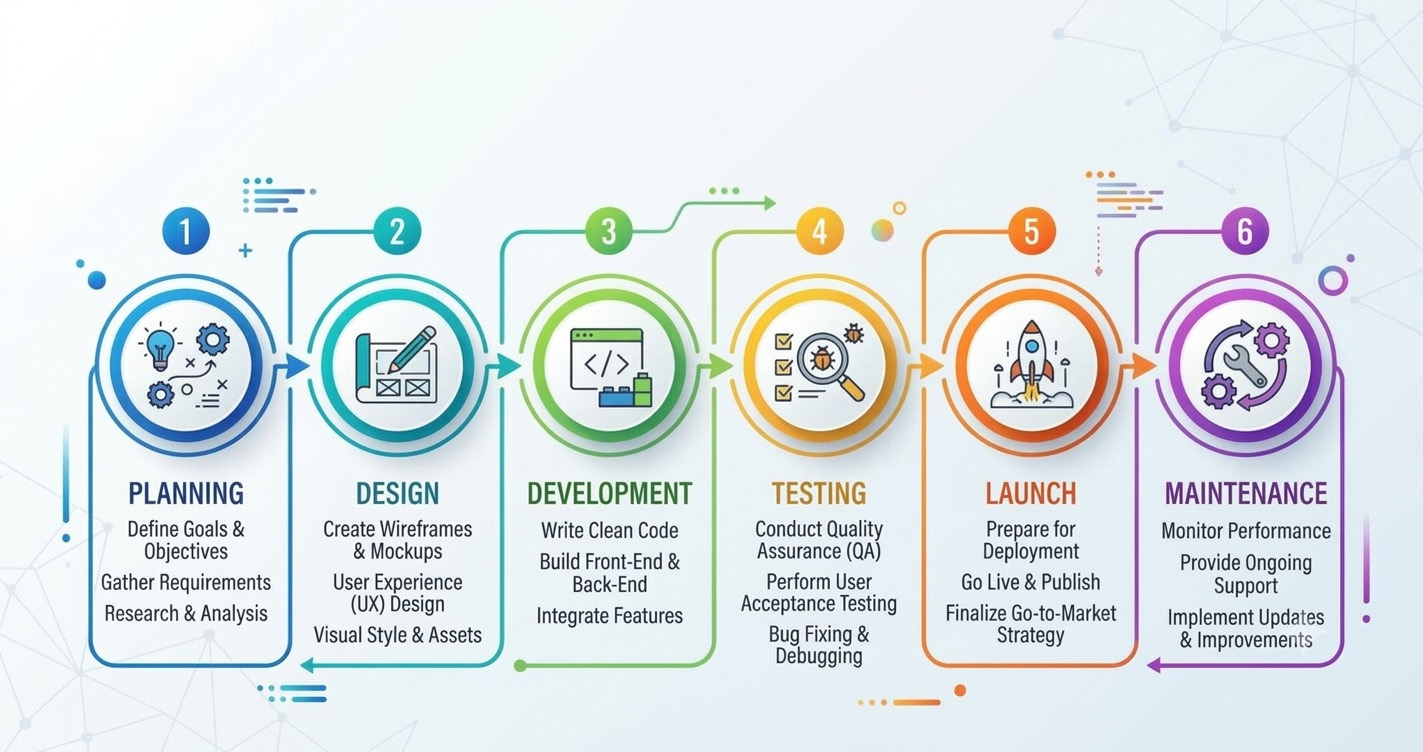
The Web Development Process
A structured development process helps control scope, reduce avoidable rework, and prepare your website for launch.
- Planning: Define goals, target users, pages, and required features.
- Design: Create layouts and organize navigation.
- Development: Build the website and integrate required systems.
- Testing: Check forms, links, responsiveness, and functionality.
- Launch: Publish the website and verify its live performance.
- Maintenance: Apply updates, resolve issues, and improve the website over time.
Key Benefits of Web Development for Businesses
- Build a stronger online presence. Give potential customers a central place to learn about your company and services.
- Generate more enquiries. Clear service pages and accessible contact forms help visitors understand what to do next.
- Support online sales. E-commerce functionality allows customers to browse products, place orders, and make payments.
- Improve user experience. Responsive layouts help visitors use your website across mobile devices, tablets, and desktops.
- Streamline business operations. Integrations and custom features can reduce repetitive tasks and connect business systems.
- Support SEO. Logical site structure, crawlable pages, and mobile usability can provide a stronger technical foundation for search visibility. Rankings are not guaranteed by development alone.
How Much Does Web Development Cost?
Web development costs vary based on project scope, design requirements, functionality, integrations, content, testing, and maintenance.
To manage your budget, identify essential features before development begins. Ask for a proposal that outlines deliverables, milestones, exclusions, and ongoing support.
Starting with clear requirements helps reduce scope changes and makes it easier to compare development proposals.
How Long Does Web Development Take?
The timeline depends on the website’s size, complexity, content readiness, integrations, and approval process. A straightforward business website generally requires less work than a custom application with complex functionality.
Prepare content early, assign decision-makers, and establish review deadlines to help avoid unnecessary delays.
How to Choose the Right Web Development Partner
Before selecting a provider, evaluate these factors:
- Business understanding: Does the team understand your goals and audience?
- Technical expertise: Can it explain the recommended platform and functionality?
- Project management: Are deliverables, timelines, and responsibilities clearly defined?
- Quality assurance: Does testing cover mobile usability and essential user journeys?
- Post-launch support: Are maintenance and future improvements available?
Choose a partner that can explain how its technical decisions support your business objectives.
Frequently Asked Questions
What is web development in simple terms?
Web development is the process of building and maintaining websites and web applications.
What are the three main types of web development?
The three commonly discussed areas are front-end, back-end, and full-stack development.
Does web development require coding?
Custom development typically involves coding, while content management systems can simplify some website-building and content-management tasks.
How does web development help SEO?
A technically sound website can support crawling, mobile usability, site structure, and performance. Useful content and other SEO factors are also important.
Does a website need maintenance after launch?
Yes. Websites may need updates, backups, security checks, bug fixes, and performance reviews to remain reliable.
Ready to Build a Website That Drives Growth?
Your website should support your business goals, make it easier for customers to engage with your brand, and provide a reliable foundation for future growth.
Amron Softech helps businesses explore technology solutions designed around their requirements. Start by defining your goals, prioritizing essential features, and choosing an approach that fits your needs.